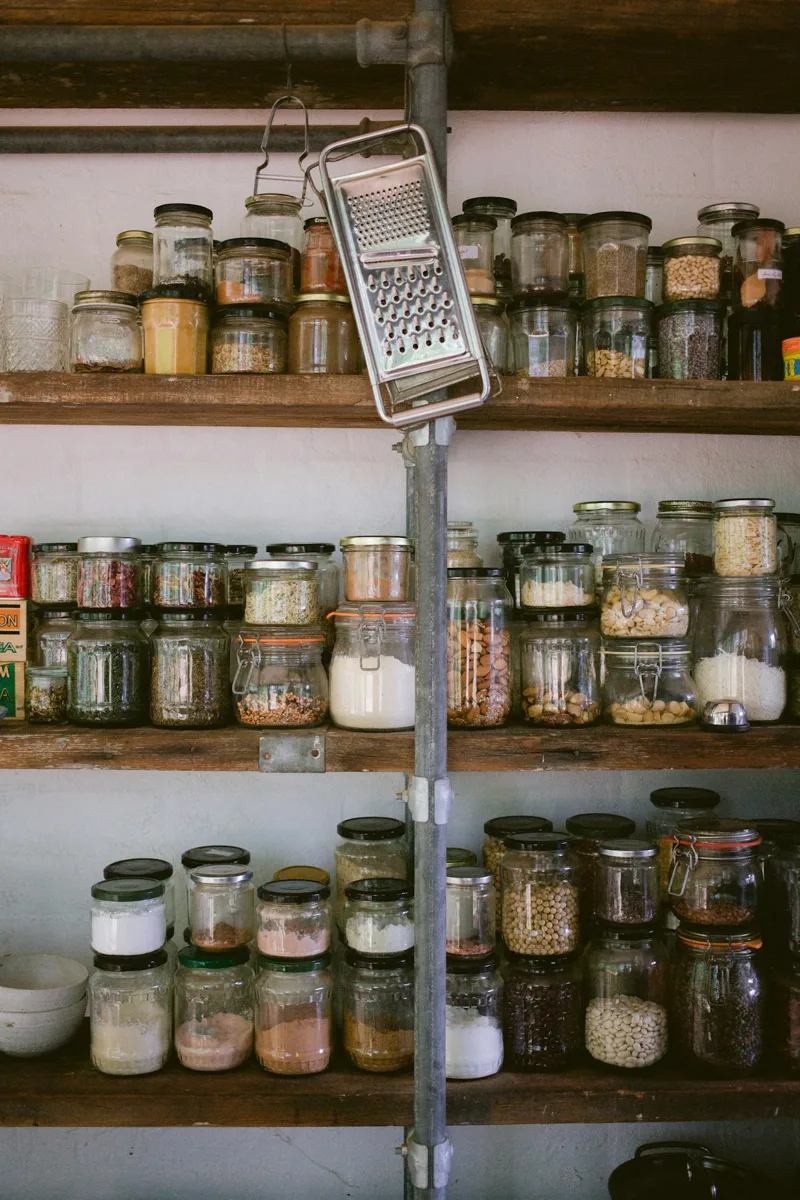
Pantry containers should keep contents accurately identifiable, not merely make the shelf look coordinated. Refilling can separate food from the information needed for suitable storage and preparation. Read the original product guidance, retain necessary details, and use containers only when the complete arrangement supports the household's actual meals.
Decide whether transfer is useful
Check storage instructions and the supplied packaging before moving food. Some products are more appropriately kept in their original form. A matching collection of jars does not justify removing protection or information from every ingredient.
Retain identity, ingredients, allergens, relevant dates, and preparation requirements in an accurate appropriate form linked to the contents. A broad label such as 'flour' may not resolve the differences that matter to a recipe or an individual dietary need. Follow qualified advice where medical concerns are involved.
Keep refill stages clear
Read the container's food suitability, condition, and care instructions. Complete appropriate washing and drying before use. Do not automatically combine a new purchase with uncertain older contents, because the result can obscure which product information applies.
If you cannot establish what a jar contains, do not guess from appearance or fragrance. Seek reliable guidance and choose an appropriate route. An attractive handwritten label cannot turn an uncertain history into a ready ingredient.
Test the label through a meal
Ask another household member to find a specific recipe ingredient and the information needed to prepare it. Choose readable wording and placement that suit the actual users. Detailed instructions can remain readily available without forcing every piece of text onto the front of a decorative jar.
Our relaxed dinner-party guide helps choose meals that the kitchen can realistically provide. Reliable pantry identity supports that preparation, while a visually tidy shelf alone does not establish what the host can appropriately cook.
Review quantities before shopping
Check what the actual meals require and what can suitably be used. A nearly empty container may be sufficient for the next recipe, while a full one may have no realistic role. Keep purchase decisions tied to actual quantities and product requirements rather than the visual desire to refill every jar to the same height.
The bring-one-dish coordination guide helps keep shared-food information clear. If an ingredient enters a dish for others, its actual identity and relevant information matter more than the container's coordinated appearance.
Keep a clear link between the current package information and its specific container, especially when several similar products share the same shelf.
Must every pantry item be decanted? No. Suitable original packaging may be simpler and more reliable. Use a container when it suits the food, preserves required information, and improves actual access and care. A pantry becomes useful through accurate contents and completed routines, not through replacing every package with an identical object.
Planning references: FDA: Safe Food Handling. Confirm current arrangements with the relevant provider.
Where to start browsing
These direct retailer links are a starting point for comparison. Confirm current stock, materials, dimensions, delivery and returns on the retailer's own site. Photographs show lifestyle inspiration, not a specific product being sold.
IKEA serving bowls ↗
Compare serving-bowl shapes, materials and dimensions.
Crate & Barrel cloth napkins ↗
Compare cotton and linen options, sizes and care instructions.