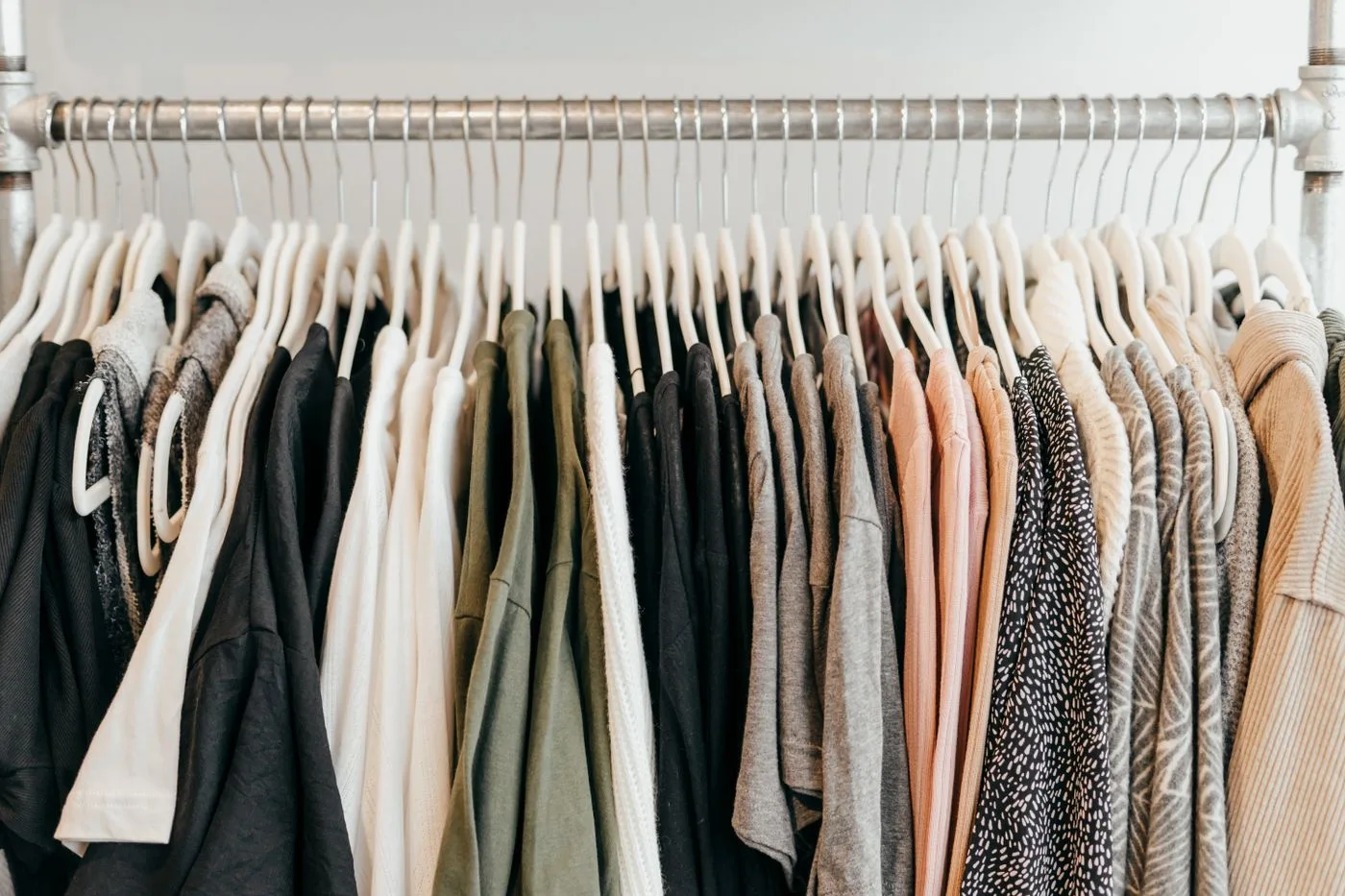
A hanger should support the garment's actual shoulder and storage requirements. A matching wardrobe can look orderly while a particular jacket, blouse, or textile needs a different shape or method. Check clothing guidance first, then choose through complete support, material contact, clearance, and comfortable retrieval rather than a large coordinated pack.
Confirm the garment's storage method
Read the care and storage information and determine whether hanging is appropriate. Some pieces need another suitable arrangement. Seek appropriate professional advice for uncertain materials or construction instead of assuming every item belongs on the rail because it has shoulders.
For hanging garments, identify the support and any intended loops or attachments. A tailored piece and a lightweight top can need different profiles. Similar clothing sizes do not establish that one hanger width suits both constructions equally well.
Inspect the full hanger
Read product guidance and look at width, curve, surface, hook, notches, and clips. Avoid damaged or rough contact points and use attachments only where suitable. A feature designed for one item can catch or stress another material.
Try a suitable garment and let it rest naturally. Do not stretch it into a preferred shape or force a delicate part onto support it does not need. The hanger should serve the item, rather than clothing becoming a way to justify a visually consistent rail.
Check the cupboard around it
Include rail height, door movement, neighboring clothes, and comfortable removal. A broad supportive hanger can use more room, while a slim one may not meet the actual support requirement. Choose through complete retrieval instead of maximizing the number fitted tightly side by side.
Our coat-hook spacing guide helps distinguish a fitting's visible size from its usable space. Hangers likewise need room for the garment and the person retrieving it, not only their own narrow outline.
Count real needs before buying
Review suitable empty hangers mixed among clothing and garments that should be stored differently. Deal with damaged or surplus items through an appropriate route. A shortage should be a specific support need, not a general feeling that a new set would make the wardrobe finished.
The knitwear repair-check guide helps keep condition and care distinct from presentation. A garment on a hanger is not automatically ready if repair, cleaning, or another requirement remains unresolved.
Compare the hanger's profile and hook position with the actual wardrobe depth. A product can support the garment yet remain inconvenient if the door catches the clothing every time it closes.
Should every hanger be wooden? No single material or shape suits every garment and home. Follow exact clothing requirements and compare complete suitable products. A mixed purposeful selection can support a wardrobe well. Matching can be pleasant, but it should follow the practical care and access that make the clothes genuinely usable.
Where to start browsing
These direct retailer links are a starting point for comparison. Confirm current stock, materials, dimensions, delivery and returns on the retailer's own site. Photographs show lifestyle inspiration, not a specific product being sold.
IKEA serving bowls ↗
Compare serving-bowl shapes, materials and dimensions.
Crate & Barrel cloth napkins ↗
Compare cotton and linen options, sizes and care instructions.