Keys need an entry return place that matches the way they actually arrive home. An attractive dish or hook will not help if it is hidden behind bags or placed where another person constantly moves it. Begin with the ordinary arrival, then choose a secure and practical arrangement for the household's own circumstances.
Observe the point of arrival
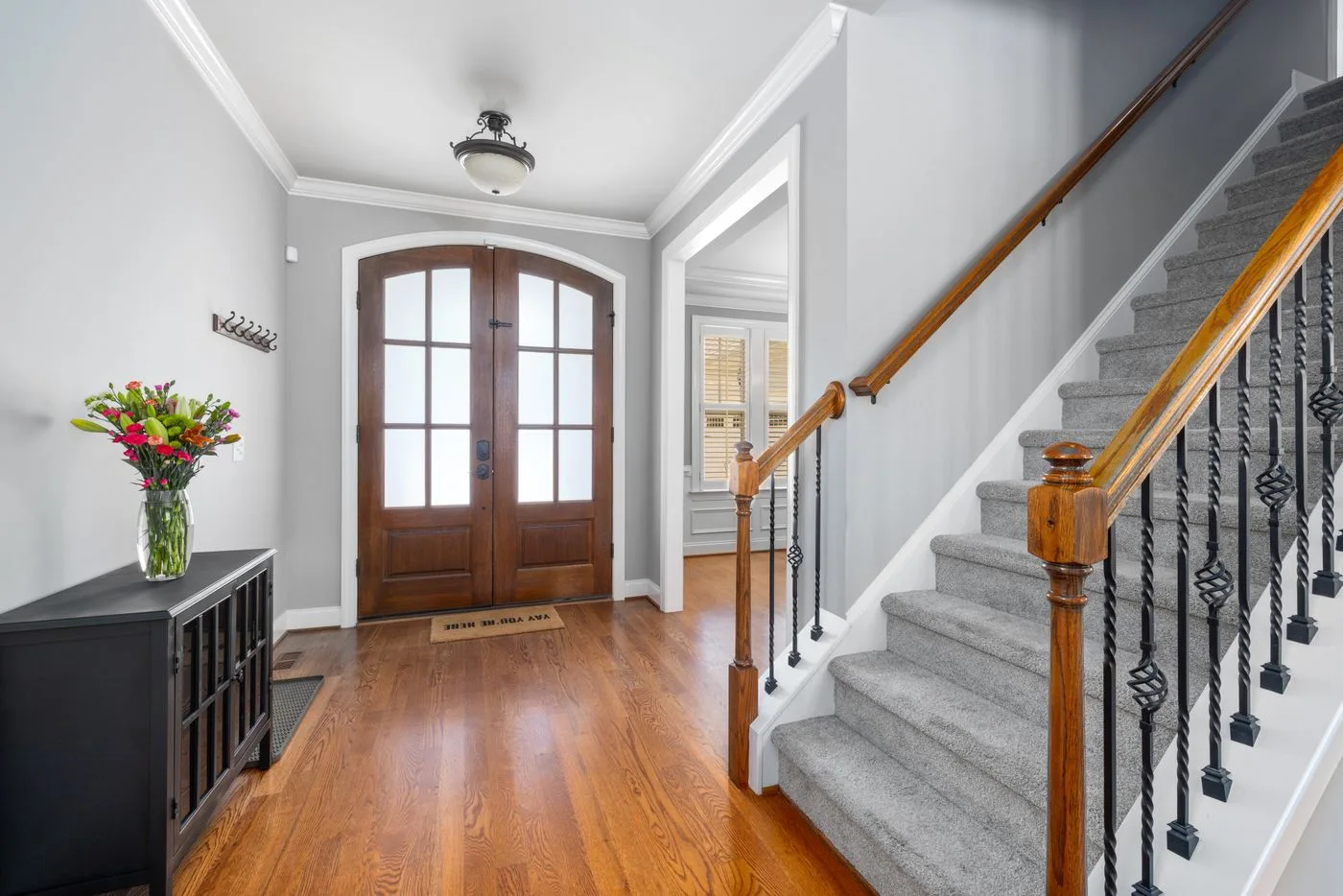
Notice who carries which keys and what else they are managing at the door. Ask where setting them down is realistic without blocking the entrance. Keep the review focused on the household's routine rather than copying the height or position of an arrangement shown in a styled photograph.
The coat hook spacing guide offers a related way to assess the entry. Keys, coats and bags share a small area, so a return place should work alongside the hanging items rather than disappearing behind a coat whenever someone gets home.
Decide what information should be visible
Think carefully about whether a proposed position exposes keys or identifying details to visitors or people outside. Follow relevant household, building and equipment guidance rather than treating this article as a security assessment. Different entry layouts and access systems call for different decisions.
Avoid adding obvious address information to a key display. If keys are unfamiliar or belong to another person, establish their purpose before moving or relabelling them. A clear arrangement should improve the household's understanding without publishing more information than is necessary.
Test the container or fitting
For a dish, consider the surface beneath it and whether it can be reached without knocking adjacent objects. Follow the product's care requirements and avoid placing it where it could fall or interfere with a door. Its useful capacity is the everyday key load, not how many loose objects can be piled into it.
If choosing a hook or wall fitting, check the manufacturer's installation requirements and obtain permission where needed. Do not improvise fixings or attach a holder to equipment whose instructions prohibit it. An existing suitable place may work without purchasing or installing anything.
Make shared use easy to understand
Agree which keys belong in the return place and which should remain elsewhere. The small jewellery dish guide helps distinguish a defined purpose from a catch-all surface. Combining unrelated valuables and paperwork can make a quick key search harder rather than easier.
Keep the entrance free of packaging from a new holder after installing it. Retain useful fitting and care instructions somewhere accessible so that later adjustments can follow the same product requirements. Try the arrangement through normal arrivals and departures. If someone repeatedly leaves their keys elsewhere, ask what makes the intended spot inconvenient. Adjust the location or the objects around it instead of assuming forgetfulness is the whole problem. The useful outcome is a place household members can use consistently while respecting their own access and security requirements.
Where to start browsing
These direct retailer links are a starting point for comparison. Confirm current stock, materials, dimensions, delivery and returns on the retailer's own site. Photographs show lifestyle inspiration, not a specific product being sold.
IKEA serving bowls ↗
Compare serving-bowl shapes, materials and dimensions.
Crate & Barrel cloth napkins ↗
Compare cotton and linen options, sizes and care instructions.