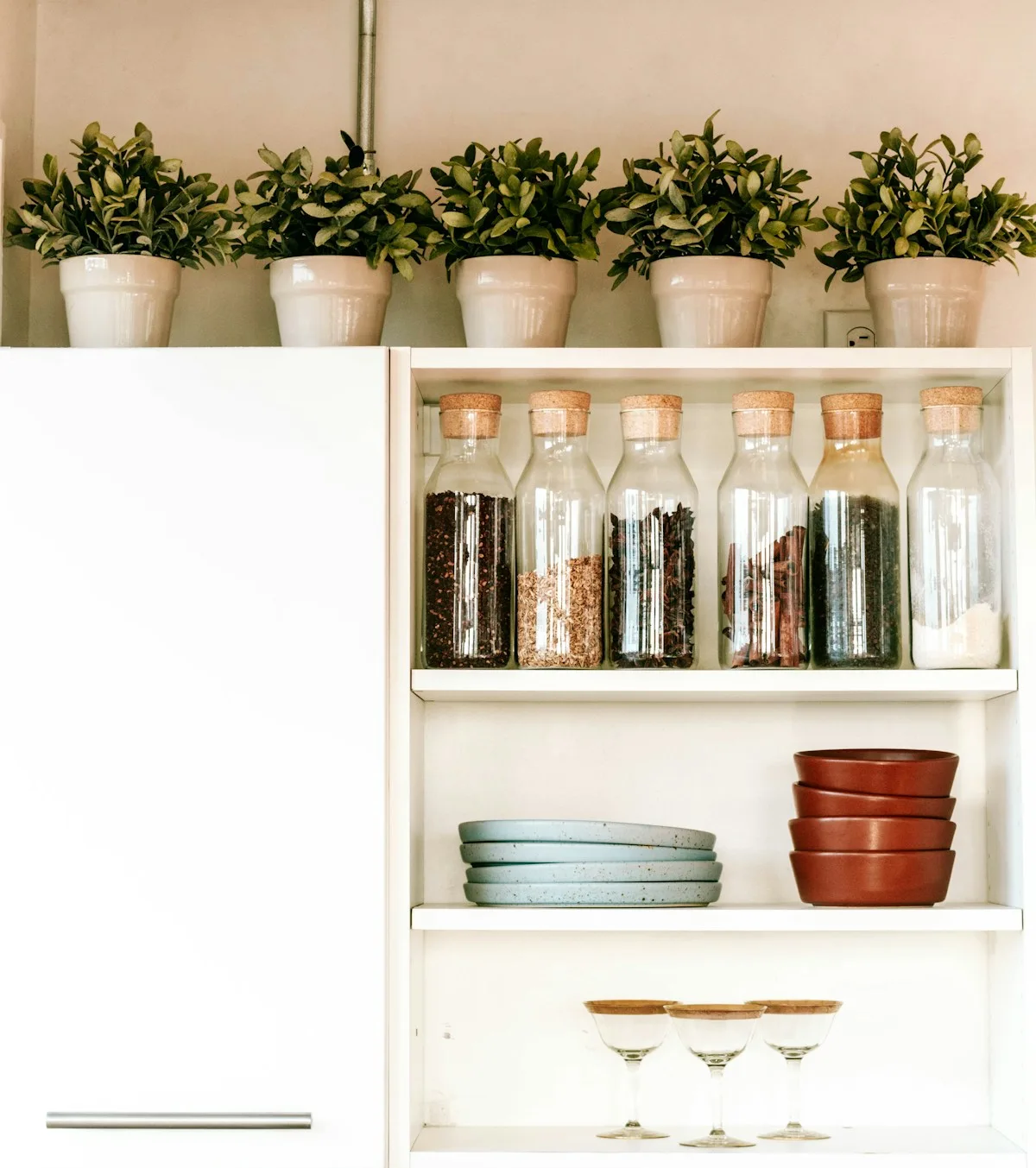
A shared kitchen shelf can be neatly arranged and still leave another person unsure where an item belongs. Make the organization understandable through the tasks people actually perform: taking a cup, returning a plate or locating a serving piece. The shelf should work for more than the person who created its most attractive arrangement.
Ask what the shelf serves
Identify the ordinary activities supported by the actual contents. A daily cup section has a different job from occasional serving ware or a decorative display. Keep those purposes visible rather than combining them solely because the colours look coordinated together.
Review the objects with the people who use the kitchen. Do not assume an unfamiliar item is unused or available to move without discussion. Shared space can still contain personal possessions and arrangements whose practical reason is not obvious at first glance.
Choose a simple division
Use locations that the household can describe in ordinary language. Everyday mugs on this section is easier to share than a pattern that depends on remembering the exact colour order. A label can help where appropriate, but it should identify a useful category rather than add another layer of decoration.
Follow the shelf's and objects' actual requirements for storage and use. Do not force a stack or place an item in an unsuitable position merely to preserve the category division. The product information and appropriate access matter alongside the visual arrangement.
Test retrieval and return
Ask another user to take an ordinary item and put it back in its understood ready state. Notice whether they must move unrelated objects or ask which apparently similar place you intended. Their confusion is useful information about the arrangement, not evidence that they failed to appreciate the effort.
The everyday dinnerware guide helps connect the shelf to pieces you actually use. Storage and selection belong together; a lovely collection is less practical if the daily item is consistently difficult to reach.
Keep readiness separate from location
Return objects through their appropriate care process before placing them among ready items. A shelf position should not conceal an unfinished washing or drying task. Explain any relevant distinction in the household's actual routine instead of relying on people to infer it from how neatly an item sits.
The gathering dish handover guide supports that clear ending after hosting. The same principle helps daily use: the person returning an item and the person taking it next should understand the same status.
Update the explanation with the arrangement
If you move a category, tell the people who rely on it. A private restyling decision can become a shared inconvenience when another person searches the old location during breakfast. Keep any useful label current and remove an obsolete one.
Review the shelf when its contents change rather than preserving empty categories or adding another container automatically. A successful shared shelf is a modest agreement people can use, leaving the objects easy to find and the next return clear without constant correction from its original organizer.
Where to start browsing
These direct retailer links are a starting point for comparison. Confirm current stock, materials, dimensions, delivery and returns on the retailer's own site. Photographs show lifestyle inspiration, not a specific product being sold.
IKEA serving bowls ↗
Compare serving-bowl shapes, materials and dimensions.
Crate & Barrel cloth napkins ↗
Compare cotton and linen options, sizes and care instructions.