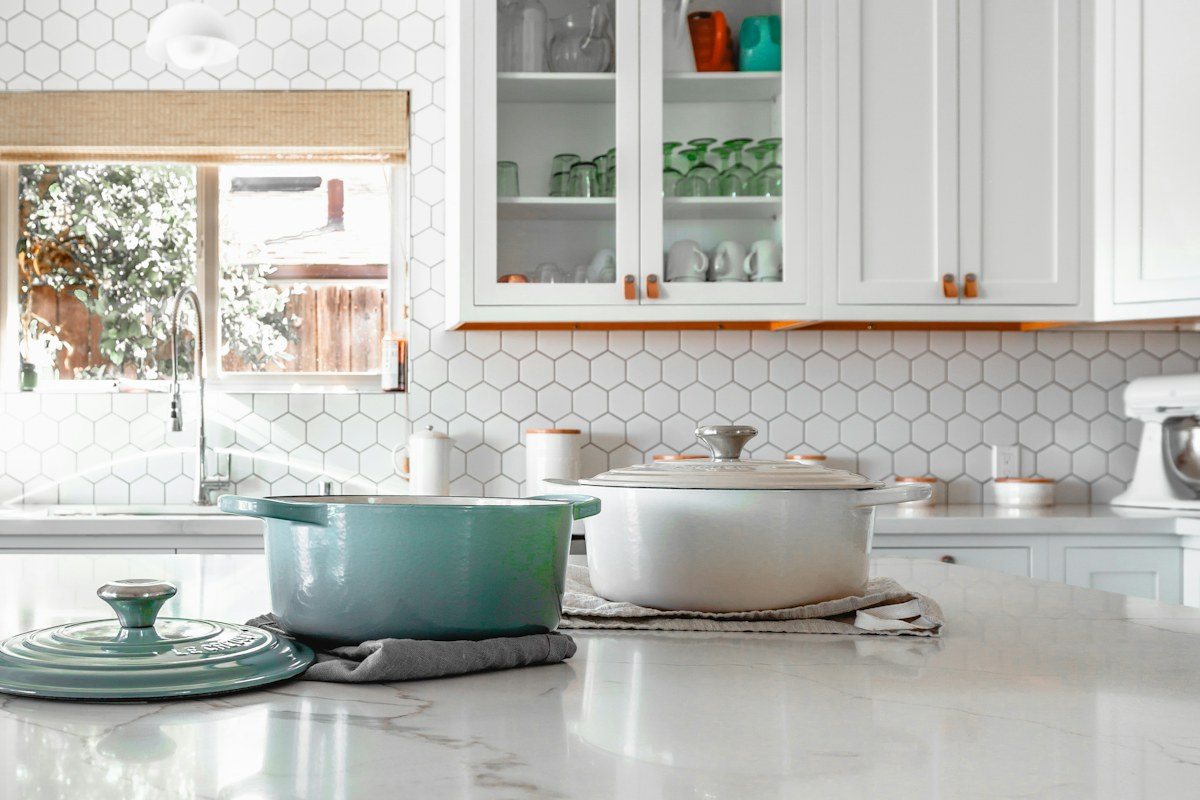
Pot lids are awkward to organise when the holder is selected before the actual pieces are examined. Handles, shapes and sizes vary, and some lids belong with equipment that has specific storage instructions. Begin with the lids you use, then decide whether a separate holder would improve their return to the cupboard.
Gather only the relevant pieces
Review the lids and matching cookware together. Identify which combinations are still in use and which pieces need further assessment before being stored. Do not discard a lid merely because its matching pan is temporarily elsewhere, or assume an unfamiliar piece is interchangeable with another vessel.
Read any instructions that apply to fragile parts, coatings or special fittings. The aim is accessible storage that respects the equipment, rather than an arrangement chosen solely because all the circles look tidy in a photograph. Keep the matching relationship understandable to everyone using the kitchen.
Consider the handles as well as the edges
A holder's usable space depends on more than its advertised width. Check how projecting handles and different lid depths affect the proposed arrangement. Measure the intended cupboard or drawer and compare the actual product specifications before assuming the lids will stand neatly side by side.
The dinnerware choosing guide offers a related principle: inspect the complete object's ordinary handling. A shape that fits into storage still needs to be retrieved and returned without scraping adjacent pieces or requiring an awkward grip.
Check the holder's installation requirements
Some organisers stand on a shelf; others need fixing or hang from a door. Follow the maker's intended use, permitted loads and installation instructions. A shelf or door should not become an improvised support simply because an accessory can be balanced or hooked over its edge.
If the space is rented or shared, establish permission before drilling or changing fittings. Avoid fitting an organiser where it prevents a cupboard from closing as designed. A storage improvement should be compatible with the kitchen rather than relying on a daily workaround to hide an installation problem.
Rehearse taking one lid out
Consider the lid used most often and the one that is hardest to handle. Can each be reached through the normal cupboard opening? Is there a suitable way to return it after the relevant cleaning and drying process? Keep manufacturer care requirements central rather than encouraging storage while a piece needs attention.
The small-space basket guide helps assess whether another container genuinely improves access. Sometimes the better answer is an existing suitable shelf arrangement, particularly when a new holder consumes the space needed by the cookware itself.
After trying the arrangement in ordinary use, note the specific remaining difficulty. A lid that catches on the opening needs a different response from a holder that cannot accommodate its handle. That distinction makes any replacement purchase more informed and helps avoid collecting several unsuccessful organisers.
Where to start browsing
These direct retailer links are a starting point for comparison. Confirm current stock, materials, dimensions, delivery and returns on the retailer's own site. Photographs show lifestyle inspiration, not a specific product being sold.
IKEA serving bowls ↗
Compare serving-bowl shapes, materials and dimensions.
Crate & Barrel cloth napkins ↗
Compare cotton and linen options, sizes and care instructions.