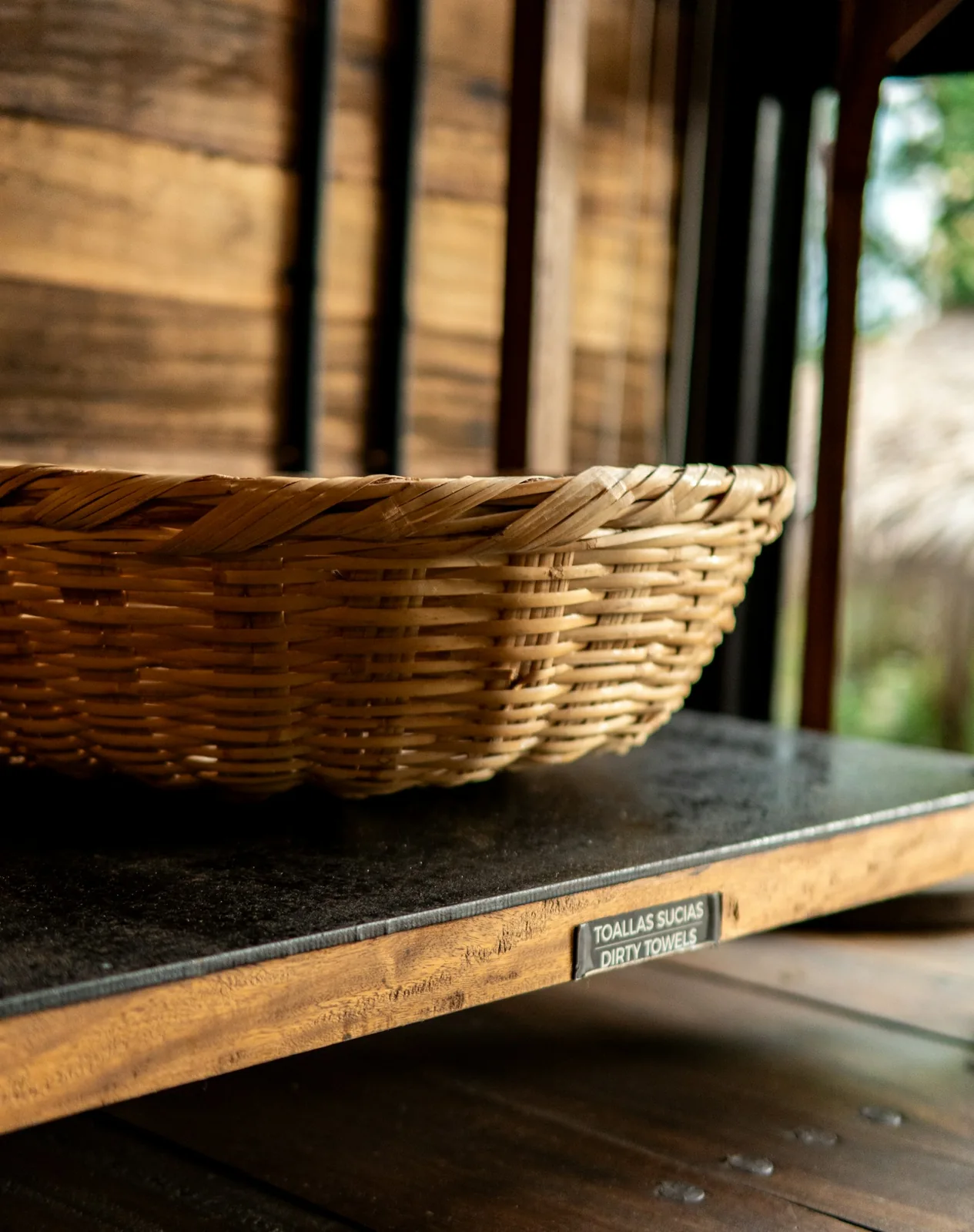
Placemats have a second shape question after the table is cleared: where and how do they return to storage? A set may look coordinated during a meal while being awkward to put away between uses. Choose through the actual product information and available storage arrangement, so the table setup does not leave a permanent pile on another surface.
Check the product's care and storage information
Read the relevant guidance for the actual material and construction. Do not assume a mat can be folded, rolled or stacked in the same way as another product with a similar appearance. If that information affects whether it will fit your home, establish it before buying.
Keep the complete dimensions in the comparison, including any rigid shape, raised feature or supplied component. A photograph that shows only the visible surface beneath a plate may tell you little about the product when it is put away.
Measure the place you intend to use
Choose a real drawer, shelf or other appropriate location and measure the usable space. Include the access needed to retrieve a mat rather than checking only whether the set can fit inside once. A cramped place can turn a simple meal setup into a repeated rearrangement of unrelated belongings.
The hosting capsule guide helps identify the set's role. You may need a modest everyday group rather than several coordinated alternatives whose storage depends on an imagined spare cupboard.
Include the used-to-ready transition
Follow the placemats' actual care requirements after the meal. A neatly stacked set is not automatically ready to return, and an attractive material does not establish that it tolerates the treatment you use for another textile. Keep items awaiting attention in an appropriate understood arrangement.
If several household members clear the table, explain the return place and any relevant distinction. A system understood only by the person who bought the mats may lead others to put them somewhere visually convenient but unsuitable for the product.
Compare a set through real meals
Consider how many places you actually prepare and which table arrangement the mats will serve. Keep occasional hosting and daily use as separate questions if that helps. More pieces can be useful when they have a genuine role, but the number in a promotional table image is not your household's requirement.
The thoughtful table settings guide helps keep the meal central. A placemat is one element of a place setting and should leave enough room for the actual dishes, glasses and people using the table.
Finish the return once
After an ordinary meal, notice whether the storage choice works through the complete routine. If the mats repeatedly remain on a chair or sideboard because their proper place is inaccessible, revisit the arrangement instead of blaming the person clearing up.
A successful set can be simple. It suits the meal, follows its own care information and returns to an appropriate place without creating another household sorting task. Its appearance is easier to enjoy when both the table and the storage routine have been considered.
Where to start browsing
These direct retailer links are a starting point for comparison. Confirm current stock, materials, dimensions, delivery and returns on the retailer's own site. Photographs show lifestyle inspiration, not a specific product being sold.
IKEA serving bowls ↗
Compare serving-bowl shapes, materials and dimensions.
Crate & Barrel cloth napkins ↗
Compare cotton and linen options, sizes and care instructions.