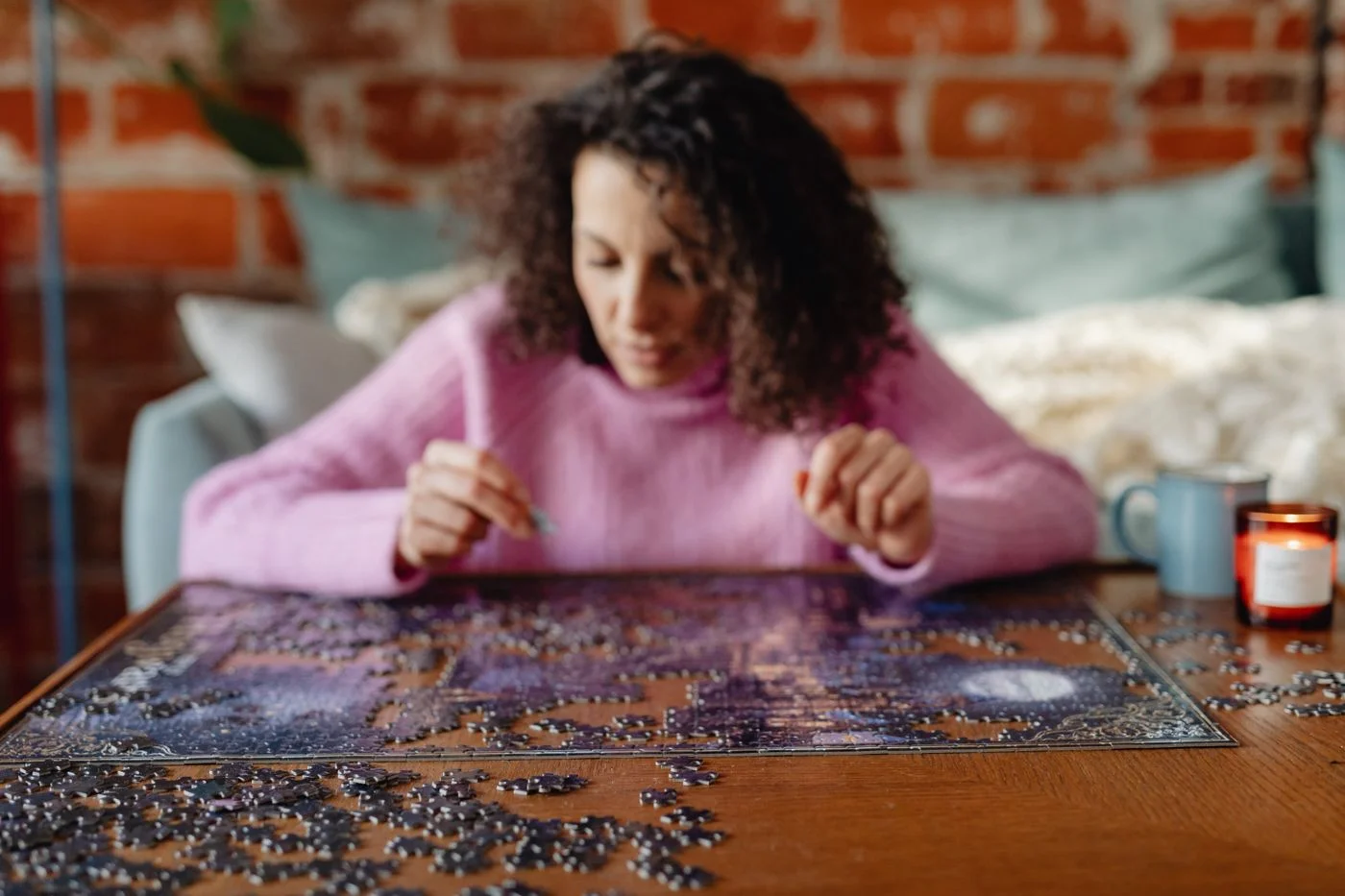
A jigsaw puzzle can offer enjoyable time at home, but the finished dimensions and working space matter as much as the picture. Choose for the recipient's interests, household, and practical setup. A thoughtful puzzle gift should not require an unplanned furniture rearrangement or a difficulty level they never asked for.
Start with the picture they want to spend time with
Consider subjects the person enjoys: architecture, illustration, landscapes, or another interest. The image will remain in front of them throughout the activity. Choose something they might genuinely like rather than a picture selected only because it feels suitable for the occasion.
Check the maker's age and safety guidance and the needs of the household. Small pieces require appropriate handling and storage, particularly around children or pets. A puzzle intended for adults should not automatically be treated as a suitable shared toy.
Read the finished dimensions
Compare the completed size with the surface the recipient is likely to use. Allow working room for sorting and viewing the reference image. Piece count alone does not establish the complete footprint, and two puzzles with similar counts can require different space.
If the person needs to move an unfinished puzzle, discuss that before adding a board or mat. Such accessories have their own dimensions, limits, and storage needs. Do not buy a large supporting item merely to justify a puzzle that does not fit the home.
Choose difficulty without making it a test
Look at image detail, color variation, piece shape information, and the recipient's expressed preferences. A repeated sky or subtle pattern may be appealing to one person and frustrating to another. Bigger or harder is not automatically more thoughtful.
Avoid promising a particular completion time or personal benefit. The puzzle is a leisure option, not a challenge the recipient must finish to appreciate the gift. A familiar comfortable level may be the best choice.
Check the product and seller details
Read current information on contents, materials, any missing-piece process, delivery, and returns. Do not transfer a service promise from one brand or edition to another. Keep the order details available in case the recipient needs help.
Inspect the package as appropriate without damaging seals or violating return conditions. If sending directly, confirm the recipient's address and suitable receipt arrangements with consent. Include a clear message so the parcel is recognizable as a gift.
Keep the extras modest
A gift note and appropriate receipt may complete the present. If you know the recipient wants a particular accessory, verify compatibility. Otherwise, let them decide how they enjoy and store the puzzle in their own space.
Does more pieces mean a better gift? Match the person and space. Should I add a puzzle mat? Only for a confirmed need. Must the recipient finish it quickly? Leave the activity entirely open to their enjoyment.
Our small-home gift guide considers footprint. The long-distance comfort-gift guide helps with a thoughtful delivery.
Where to start browsing
These direct retailer links are a starting point for comparison. Confirm current stock, materials, dimensions, delivery and returns on the retailer's own site. Photographs show lifestyle inspiration, not a specific product being sold.
Crate & Barrel cloth napkins ↗
Compare cotton and linen options, sizes and care instructions.
IKEA serveware ↗
Browse serving pieces and confirm dimensions before buying.