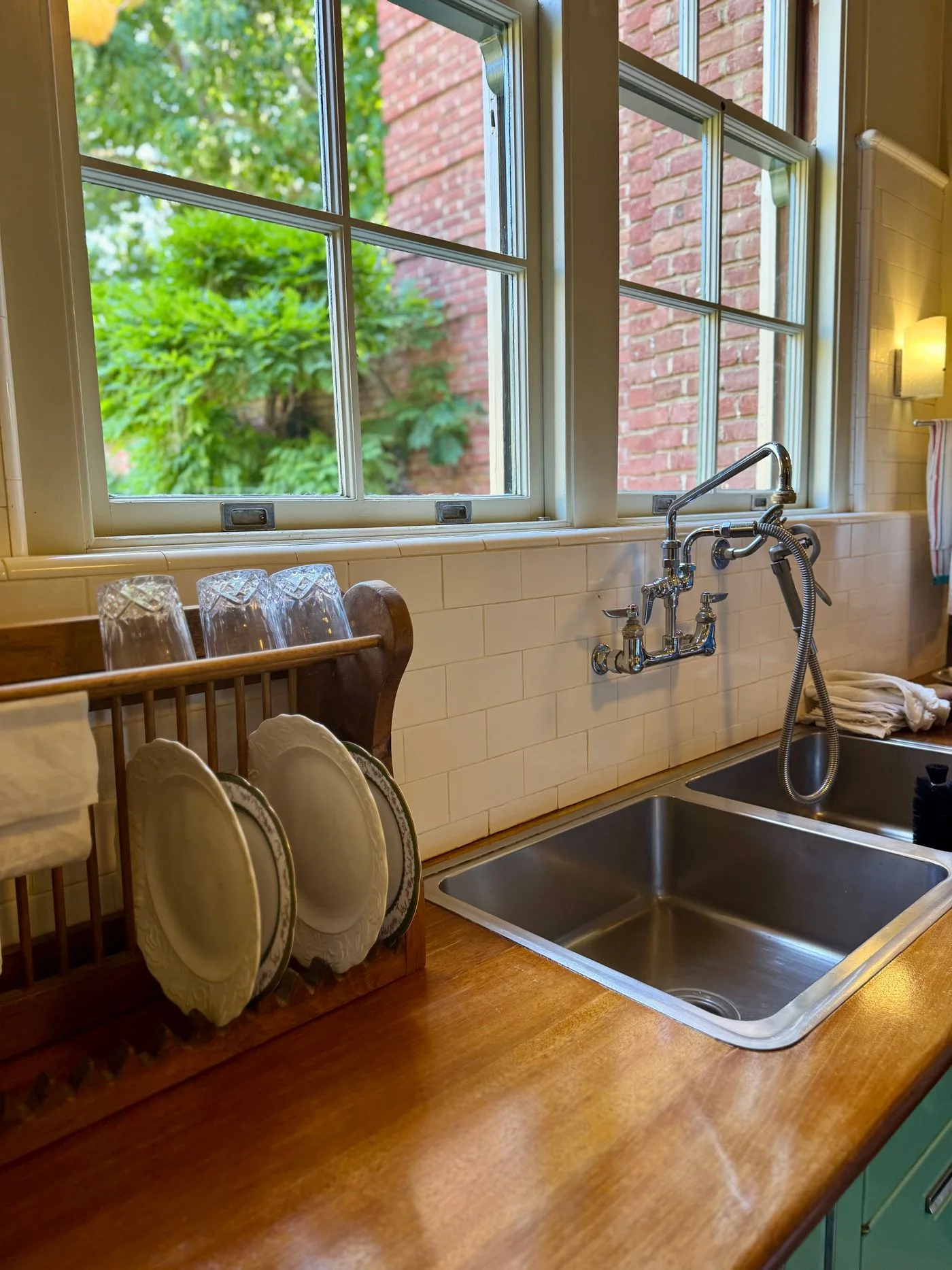
A dish rack needs room for its own care as well as for dishes. Removable trays, utensils holders, and drainage components can make the full maintenance task larger than the main frame's footprint. Check the whole cycle before choosing a rack for a small kitchen, so a tidy-looking product does not create another crowded surface.
Observe the dishes you actually use
Follow the dishes' care requirements and appropriate kitchen hygiene. Notice which items need the rack and which require another suitable method. A large pan, delicate glass, and everyday plate may not belong in the same support arrangement simply because there is an empty gap.
Return appropriately ready dishes rather than treating the rack as a cupboard. If finished items remain there because storage is inconvenient, address that real problem. Another rack can hide the same incomplete stage without making the kitchen easier to use.
Read the complete product guidance
Check setup, drainage, load, materials, and cleaning instructions. Include every removable part in the assessment. A tray advertised as easy to remove still needs a suitable place and method for care before it can return.
Compare the full open footprint with the sink and surrounding working space. Protect surfaces through an appropriate arrangement under their requirements. Do not assume a decorative mat or improvised support provides the drainage and stability the product needs.
Try the maintenance route
Consider how you will access and care for joints, attachments, and the area beneath the rack as instructed. Keep ready and used equipment distinct. A product that cannot appropriately be cleaned within the available facilities may be inconvenient even when it fits beside the sink.
Our everyday dinnerware guide helps keep the dish collection tied to real use. The rack should serve those suitable pieces rather than become a reason to keep more items because its design has additional compartments.
Give the rack a clear return
Complete the instructed care and appropriate drying before reassembly or storage. Keep components recognizable so the next use does not begin with an uncertain missing part. If a piece is damaged or the arrangement unreliable, seek suitable manufacturer guidance rather than an improvised repair.
The hosting-capsule guide helps limit equipment to a practical collection. A gathering should not leave the kitchen dependent on several extra drying surfaces simply because the ordinary rack's full capacity and return stage were never considered.
Check where removable parts will appropriately dry after cleaning, rather than assuming they can all return immediately to the main frame.
Is a folding rack easier? Compare the complete open use, drainage, cleaning, reassembly, and closed storage. Folding dimensions answer only one part. A simple suitable fixed design may work better for some kitchens, while another genuinely benefits from a folding product whose entire care route is manageable.
Planning references: FDA: Safe Food Handling. Confirm current arrangements with the relevant provider.
Where to start browsing
These direct retailer links are a starting point for comparison. Confirm current stock, materials, dimensions, delivery and returns on the retailer's own site. Photographs show lifestyle inspiration, not a specific product being sold.
IKEA serving bowls ↗
Compare serving-bowl shapes, materials and dimensions.
Crate & Barrel cloth napkins ↗
Compare cotton and linen options, sizes and care instructions.