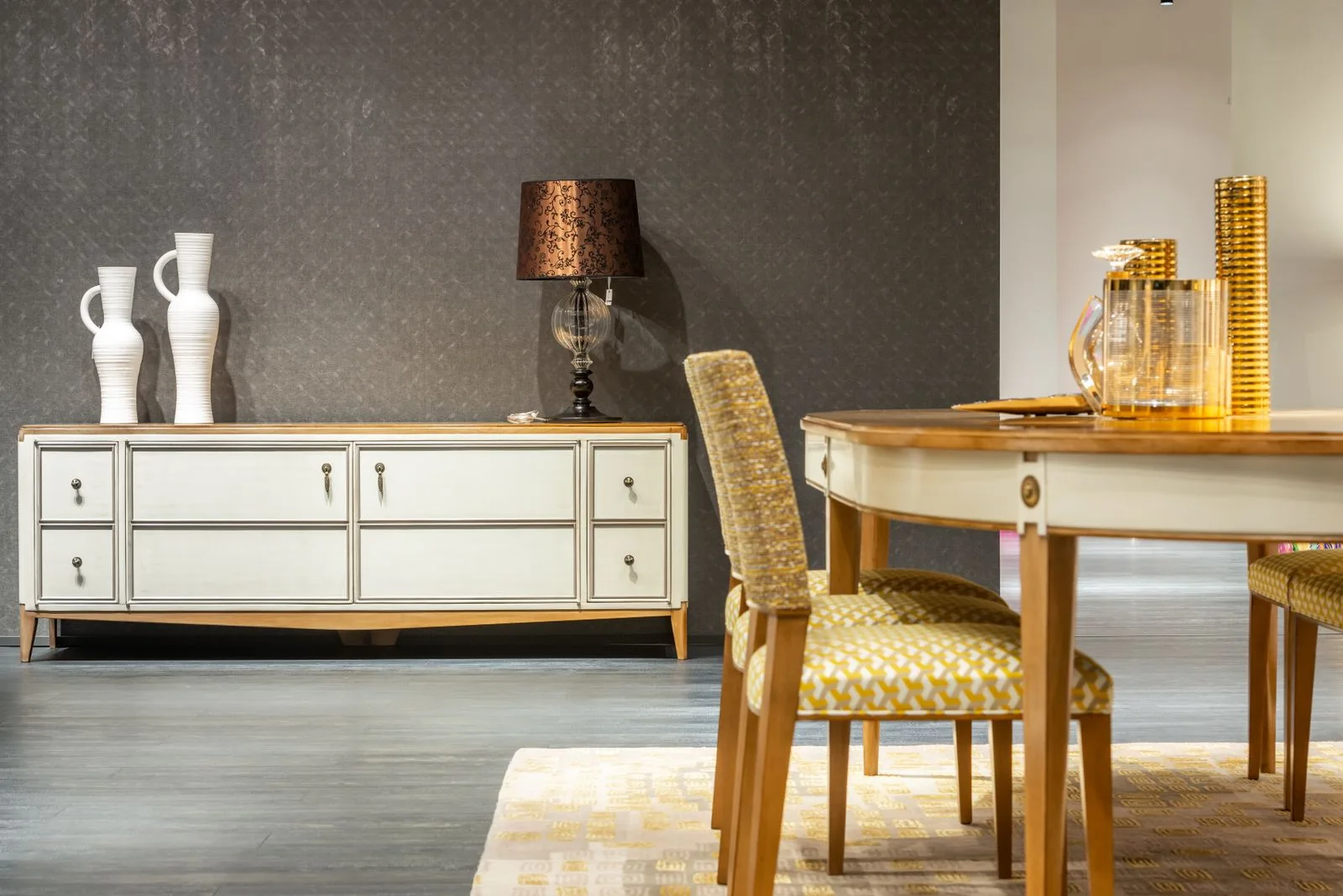
A dining-chair fabric can look different as a small screen image, a loose sample and a complete chair in your room. Compare those views deliberately before choosing upholstery. A sample is useful evidence about appearance and feel, while the product's actual information still needs to answer its intended use, care and other relevant requirements.
Identify the exact option
Record the maker's fabric name or code and the chair option it belongs to. Similar colour names can describe different materials or ranges. Do not assume a sample from another product establishes how the upholstery you intend to order will look or be specified.
Read the actual product information and ask about an unresolved important detail before ordering. A broad label such as durable or easy care is not the same as knowing the stated requirements of this exact upholstery and chair.
Bring the sample into the real room
When an appropriate sample is available, view it beside the actual table and surrounding finishes. Look from the places where you ordinarily see the chairs. A fabric can relate differently to the room's wood, wall colour and other textiles than it did against a plain retail background.
Keep the comparison personal. You may like a quiet relationship or a strong contrast, and neither preference requires a universal rule. Avoid treating a digital photograph as an exact colour reference when the physical sample is what you are actually assessing.
Consider scale and repetition
Remember that a small piece is only part of the finished upholstered area. If the fabric includes a pattern or texture, ask how the actual product is specified and what information the sample can establish. Do not infer exact pattern placement or the appearance of every chair from one small piece.
The dining chair table-fit guide handles another necessary comparison. An upholstery preference does not settle whether the chair itself works with the actual table and occupied room.
Keep care questions with the product
Read the stated cleaning and care information and consider whether it fits your household's real routine. Do not test an unapproved treatment on a sample and assume the result establishes a suitable method for the finished chair. The relevant product guidance should govern that decision.
The cushion cover care guide supports the broader habit of checking ownership requirements before choosing colour. Dining-chair upholstery is a different product, so use its own instructions rather than borrowing a textile routine from elsewhere in the room.
Confirm the order through the actual reference
Before committing, check that the selected chair, upholstery code and other relevant options match the choice you reviewed. Preserve the appropriate order information and any useful sample reference. A careful room comparison is wasted if a similar-looking option is selected by mistake afterward.
Choose the fabric as one part of a complete chair decision. Its colour and texture can add pleasure to the dining room while the physical product, care routine and fit remain grounded in the information you actually established.
Where to start browsing
These direct retailer links are a starting point for comparison. Confirm current stock, materials, dimensions, delivery and returns on the retailer's own site. Photographs show lifestyle inspiration, not a specific product being sold.
IKEA serving bowls ↗
Compare serving-bowl shapes, materials and dimensions.
Crate & Barrel cloth napkins ↗
Compare cotton and linen options, sizes and care instructions.